
Apr 03, 2026
Daily Life of a Hotel Management Student – A Journey of Passion, Discipline & Growth
Daily Life of a Hotel Management Student – A Journey of Passion, Discipline & Growth
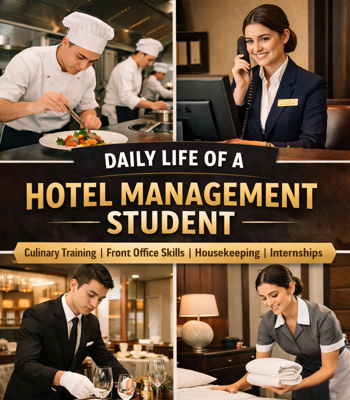
The life of a hotel management student is far more exciting and dynamic than most people imagine. It’s not just about cooking delicious food or managing a hotel—it’s about developing a complete personality, learning professionalism, and mastering the art of hospitality. Every day brings a new challenge, a new skill, and a new opportunity to grow.
If you’re considering a career in hotel management, understanding the daily routine of a student can help you visualize your journey ahead.
Morning: Starting with Discipline & Preparation
A typical day for a hotel management student begins early. Just like the hospitality industry, punctuality is extremely important. Students often start their day by getting ready in proper uniform—well-ironed clothes, polished shoes, neat hair, and a confident attitude.
Presentation is everything in this field. From the way you walk to how you greet people, every small detail matters.
Many institutes begin with theory classes in the morning, where students learn subjects such as:
- Food Production
- Food & Beverage Service
- Front Office Operations
- Housekeeping Management
- Hospitality Communication
These classes build the foundation of knowledge required to succeed in the industry.
Mid-Morning: Practical Training Begins
This is the most exciting part of the day. Hotel management is a skill-based course, and practical sessions are where students truly shine.
Kitchen Training (Food Production)
Students enter fully equipped training kitchens and learn:
- Basic to advanced cooking techniques
- Knife skills
- Food presentation
- Hygiene and safety standards
From cutting vegetables perfectly to plating dishes like professionals, every detail is practiced repeatedly.
Restaurant Service Training (F&B Service)
In mock restaurants or training labs, students learn:
- Table setup and etiquette
- Serving styles (silver service, buffet, etc.)
- Guest interaction
- Handling complaints professionally
Here, students learn how to deliver a memorable guest experience.
Front Office Practice
This is where the “face of the hotel” is trained.
Students practice:
- Greeting guests
- Reservation systems
- Check-in and check-out procedures
- Communication skills
Confidence and personality development are key in this department.
Housekeeping Training
Students learn the importance of cleanliness and organization:
- Room setup standards
- Bed making techniques
- Cleaning procedures
- Interior aesthetics
This department teaches attention to detail and perfection.
Afternoon: Lunch & Informal Learning
Lunch breaks are not just for eating—they are also a time for:
- Group discussions
- Sharing experiences
- Learning teamwork
Many students also taste dishes prepared during practicals, which helps improve their understanding of flavors and presentation.
Late Afternoon: Assignments & Skill Development
After practical sessions, students often attend:
- Communication skill classes
- Personality development sessions
- Computer and hotel software training
Assignments and projects are also an important part of the day. These include:
- Menu planning
- Case studies
- Event planning exercises
Students are encouraged to think creatively and practically.
Evening: Internships & Real-World Exposure
Many hotel management students either prepare for or are already involved in industrial training (internships) in hotels.
During internships, they experience:
- Real guest interactions
- Pressure handling
- Team coordination
- Professional work culture
This is where classroom learning meets real-world application.
Night: Self-Improvement & Reflection
At the end of the day, students often:
- Revise what they learned
- Practice communication skills
- Watch hospitality-related content
- Prepare for the next day
This habit of continuous improvement is what makes them industry-ready professionals.
Skills Developed in Daily Life
The daily routine of a hotel management student helps build essential life skills:
- Confidence and Communication
- Discipline and Time Management
- Teamwork and Leadership
- Problem-Solving Ability
- Professional Grooming
These skills are not only useful in hotels but in any career path.
Why Choose IPSM Group of Institutions?
Choosing the right institute plays a crucial role in shaping your career. IPSM Group of Institutions stands out as a top choice for hotel management students for several reasons:
Industry-Focused Training
IPSM emphasizes practical learning along with strong theoretical knowledge, ensuring students are job-ready from day one.
Modern Infrastructure
Well-equipped kitchens, mock hotel setups, and advanced labs provide real-world exposure within the campus.
Experienced Faculty
Students are guided by professionals with years of industry experience, offering valuable insights and mentorship.
Placement Assistance
IPSM provides strong placement support, helping students secure opportunities in reputed hotels and hospitality brands.
Personality Development
Special focus is given to grooming, communication skills, and confidence building—essential for success in hospitality.
Career Opportunities
From hotels and airlines to cruise ships and event management, IPSM opens doors to multiple career paths.
Conclusion
The daily life of a hotel management student is a perfect blend of learning, discipline, creativity, and excitement. It prepares students not just for a job, but for a successful career in the global hospitality industry.
Every day is a step toward becoming a confident, skilled, and professional individual who can handle real-world challenges with ease.
If you are passionate about hospitality, enjoy interacting with people, and love dynamic work environments, hotel management could be the perfect career choice—and IPSM Group of Institutions can be your ideal starting point.